Seamless Business Relocation: How to Move Your Stockport Office Without the Downtime
Planning Your Move: The Six-Week Countdown
Moving an office is significantly more complex than a domestic move. Whether you are expanding from a small office in Stockport to a larger premise in Leeds or downsizing your operations from a city-centre site in Manchester to a more flexible space in Bristol, preparation is the key to avoiding lost revenue. We recommend starting your logistics planning at least six weeks out.
Begin by conducting a full audit of your current assets. Do you need to keep every filing cabinet? Are there outdated computers destined for recycling? Decluttering now prevents you from paying to transport equipment you no longer need. For items staying, create a detailed inventory list that includes measurements, as this will help your man-and-van team provide an accurate quote for space and labour.
Protecting Your Tech and Essential Documents
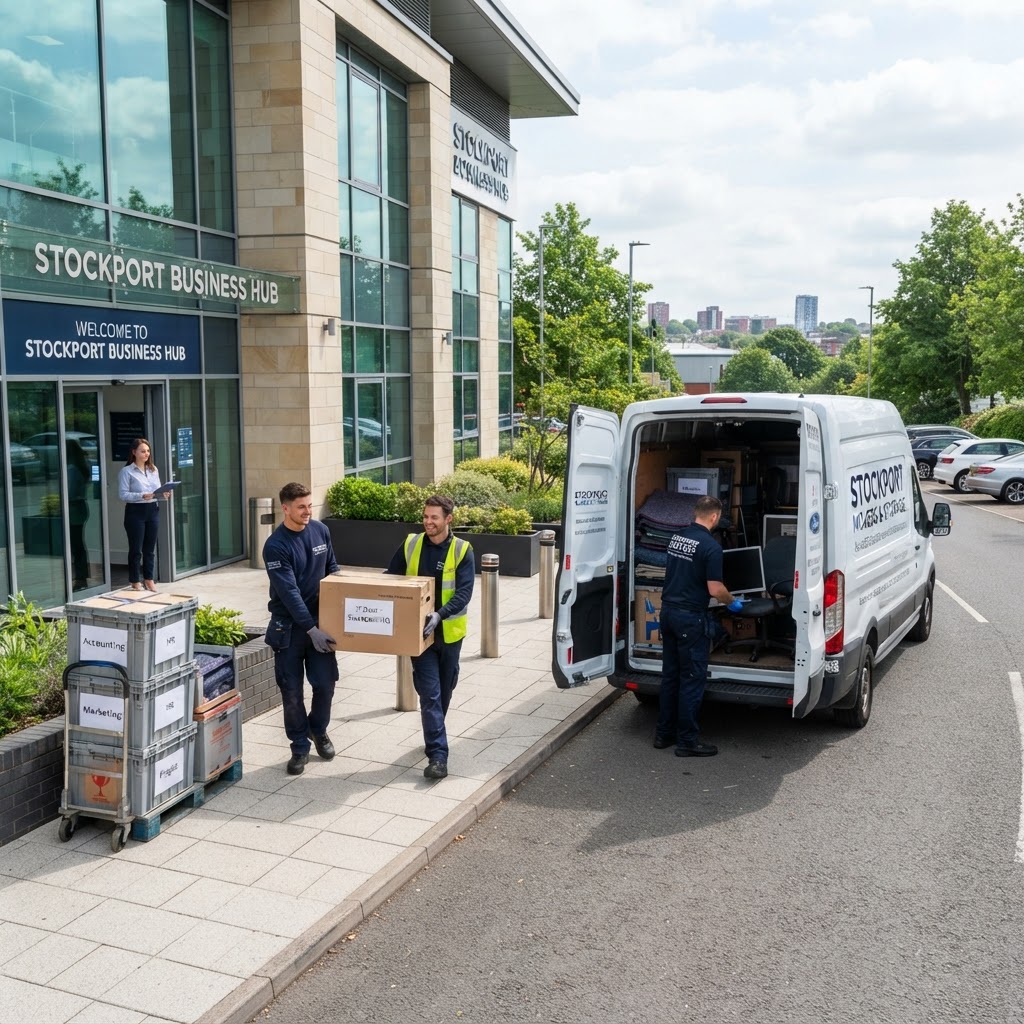
IT equipment and sensitive documentation are the lifeblood of your business. When moving from hubs like Salford or Trafford, your server racks, monitors, and networking cables require specialist handling. Invest in high-quality, anti-static bubble wrap and sturdy, double-walled boxes.
We advise colour-coding every crate. Create a floor plan for your new location in cities like Birmingham or Liverpool and label each box with the specific desk or room number. This saves hours of manual labour once you arrive, ensuring your team can plug in their workstations and get back to business immediately.
Working with Professionals
While many companies attempt a DIY approach, the risks to expensive hardware and office furniture are high. Professional removal teams, such as VanMovePro, understand the specific challenges of commercial moves—from navigating narrow staircases in historic Bolton buildings to managing tight parking restrictions in London. We offer flexible solutions that cover everything from local moves within Greater Manchester to long-distance hauls to Edinburgh or Nottingham.
When hiring a team, ensure they have goods-in-transit insurance and can provide references. A professional removal firm will also conduct a site survey. This allows us to spot potential issues, like restricted access or the need for dismantling desks, well before the day of the move.
Communicating with Your Team
Your staff will be the most affected by the move. Keep them informed of the timeline and what is expected of them regarding packing their personal belongings. If you are moving from a quiet site in Rochdale to a bustling district in Sheffield, prepare your team for changes in local amenities and transit routes. A well-informed team is a productive team, and clear communication helps maintain morale during what can be a disruptive period.
Managing the 'Day Zero' Logistics
On the day of the relocation, focus on the 'critical path'. Ensure your internet and phone lines are scheduled to go live at your new premises before you arrive. If you are moving items from Wigan or Bury to a new location, keep an 'essentials box' on the van—this should contain items like kettle supplies, first aid kits, toolkits, and critical connectivity hardware.
By staying organised and partnering with a removals expert who understands the nuances of UK-wide logistics, your move can be a catalyst for growth rather than a source of stress. Whether you are moving across the North West or further afield, planning ahead is the best way to safeguard your business continuity.